

East Waco Thrives as Public, Private, and Nonprofit Efforts Align
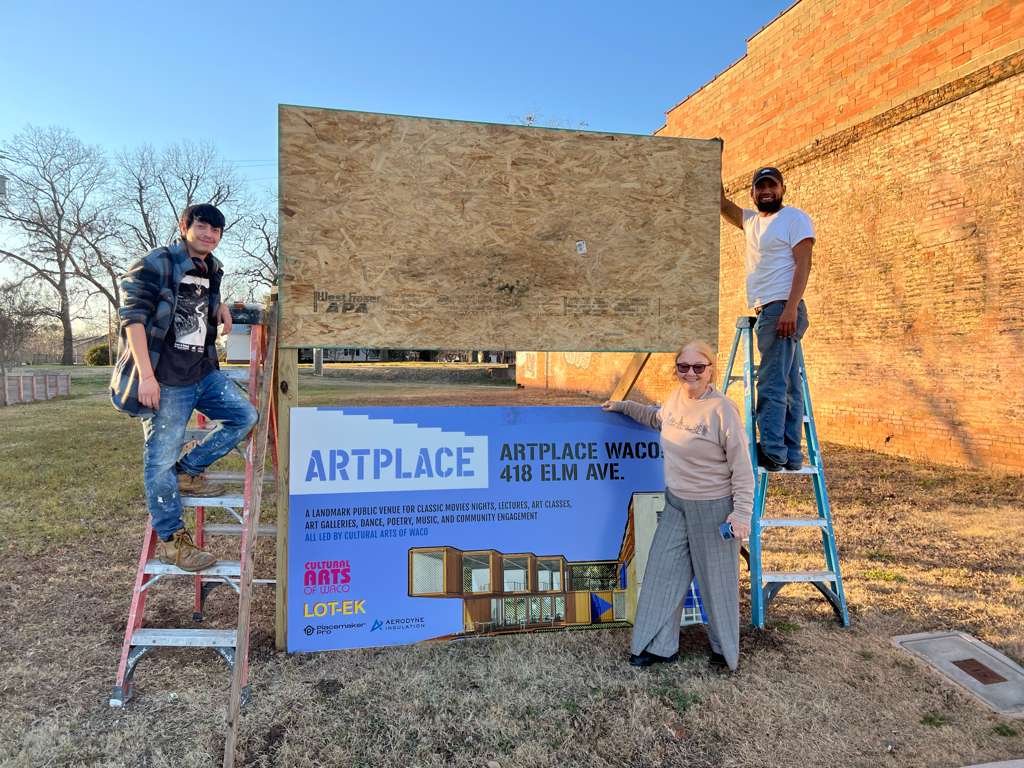
The Placemaker Pro team begins work on ArtPlace Waco, January 2026.
City infrastructure, private developers, and local nonprofits are teaming up to revitalize East Waco while keeping longtime residents at the center.
WACO, TX, TX, UNITED STATES, June 9, 2026 /EINPresswire.com/ -- On Saturday mornings, Elm Avenue is vibrant. Families stroll past new sidewalks, vendors gather for the farmers market, and live music fills the air. For longtime residents, city leaders, and local advocates, this activity reflects years of effort to stabilize a long-overlooked neighborhood.
East Waco, a historically African American community across the Brazos River from Waco’s downtown core, was once a thriving cultural and commercial hub served by an active commuter train line. Over time, it faced rising numbers of vacant lots and deteriorating homes, even as downtown Waco experienced a major tourism and development surge just minutes away.
Today, renewed attention from city leaders, nonprofits, and local developers is shaping the neighborhood’s growth, balancing optimism with questions about its future. City officials emphasize laying groundwork over forcing rapid change.
“Over the past several years, we’ve made intentional investments in infrastructure across East Waco such as sidewalks, streetscapes, bike connectivity and public gathering spaces because the foundation of redevelopment starts with making a neighborhood functional, safe and welcoming,” said Waco City Councilmember Andrea Jackson Barefield. “But infrastructure alone isn’t the goal. The real objective is creating the conditions for responsible reinvestment that benefits the people who already call this community home. That means supporting existing residents, creating pathways for small businesses and making sure growth reflects both the history and the future of East Waco.”
A major piece of this foundation is the historic Elm Avenue corridor. Largely dormant for decades, the street underwent a significant city-led, TIRZ-funded transformation featuring widened sidewalks, new lighting, and a resurfaced roadway.
This revitalization paved the way for the Waco Downtown Farmers Market to relocate to Elm Avenue, drawing hundreds of weekly visitors, including Baylor University students.
“Bridge Street Plaza has become a catalyst for activity along the Elm Avenue corridor,” Barefield said. “The Farmers Market serves as an entry point for entrepreneurship. We intentionally worked with market leadership to create opportunities and incentives for East Waco residents to participate as vendors, so that economic activity generated here can also grow from within the neighborhood. It’s about creating space for small businesses to test ideas, build customer bases, and grow in place while also drawing visitors who then discover the broader East Waco community.”
The city has also streamlined the development process in East Waco to encourage infill housing and historic renovations.
“Older neighborhoods often come with more complexity, especially when bringing out-of-compliance properties up to modern standards,” said Clint Peters, Director of Development Services in the City of Waco. “Our goal has been to work collaboratively with developers who are committed to the neighborhood, helping them navigate the process while still preserving the character of the area.”
This environment has successfully spurred private investment. Placemaker Pro, a local real estate development and construction firm, is currently renovating long-neglected homes and building new residential units on vacant lots.
“East Waco has a strong identity” said Daeja Roman, a Partner at Placemaker Pro and Waco resident. “We see our role as helping bring neglected properties back into use, not replacing the neighborhood with something generic.”
Placemaker Pro maintains a deep neighborhood presence, basing its office locally and hiring local workers. This community-minded approach extends to its affiliate company, Aerodyne Pro, which provides a suite of residential construction services. As development in East Waco scales up, so does the demand for these local services.
“We are seeing more consistent work, and that supports local jobs,” said Irvin Becerra, Aerodyne Pro’s Project Manager and a lifelong Waco resident. “These projects are not abstract. They put people to work who already live in this community. We’re putting our money right back into this area.”
Both firms actively support Cultural Arts of Waco, a local nonprofit led by Doreen Ravenscroft that focuses on cultural preservation and community engagement. The companies have donated labor, materials, and funds for initiatives like building a stage for the annual Día de los Muertos celebration.
In January 2026, the partnership launched its largest project yet: a "phase 1" property improvement plan to stabilize Cultural Arts of Waco’s landmark building at 418 Elm Avenue. The team repaired the roof and façade, added insulation, and restored power to the former drug store and theater, which is slated to become "ArtPlace Waco," a future community arts hub.
“We’d been trying to get that roof repaired for years,” Ravenscroft said. “After receiving multiple estimates that were far beyond our means, it felt truly extraordinary when Placemaker Pro and Aerodyne stepped in and donated the entire project. It was a dream come true. Their generosity allows us to move forward with plans to expand our Art on Elm event and once again host a Youth Art Exhibition in the building.”
The stabilization work completed a month ago clears the way for the next phase of development. Ravenscroft notes that these types of collaborations are essential during this period of renewed interest.
“Investment does not have to mean displacement,” Ravenscroft said. “When organizations and businesses take the time to listen and work alongside residents, you can create growth that benefits the whole community.”
As East Waco continues to change, city leaders say coordination among public agencies, private investors, and community organizations remains critical.
“Neighborhood revitalization is never the work of one entity alone,” Barefield said. “It requires alignment between public investment, responsible private development and the nonprofit and cultural organizations that anchor community life. Most importantly, it must include the residents whose families have carried the history of this neighborhood for generations. When redevelopment is done thoughtfully, it doesn’t erase that legacy, it strengthens it and ensures East Waco continues to be a place where people can live, work and build opportunities for the future.”
For a neighborhood that has waited a long time for meaningful reinvestment, the hope is that East Waco’s next chapter will offer steady improvement that supports the community’s future while honoring its history.
Melissa Collins
Placemaker Pro
contact@placemakerpros.com
Visit us on social media:
LinkedIn
Facebook
Other
Legal Disclaimer:
EIN Presswire provides this news content "as is" without warranty of any kind. We do not accept any responsibility or liability for the accuracy, content, images, videos, licenses, completeness, legality, or reliability of the information contained in this article. If you have any complaints or copyright issues related to this article, kindly contact the author above.
